Blogs
The Cost of Paper in Freight and What Happens When It Disappears
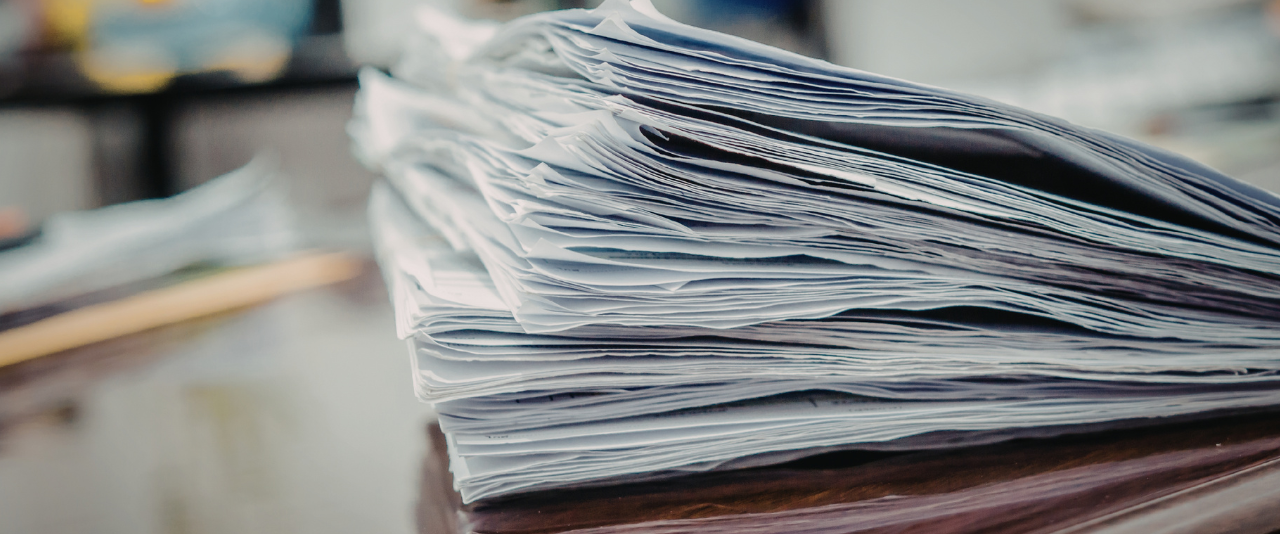
Freight is built around movement, but a lot of the work still ends up on paper.
Shipment documents are printed, handled, filed, checked, and stored, from bills of lading and proof of delivery to invoices and customs paperwork. Every shipment leaves behind a document trail that someone has to manage, often long after the goods themselves have moved.
There is a reason this way of working has lasted. It is familiar, and in many operations it still works. But it also creates a layer of admin around the movement of freight itself. The paper is not moving the shipment forward; it is carrying information about the shipment, and that is where the cost often starts to show.
The Hidden Cost Is Not the Paper Itself
The cost of paper in freight is rarely about the paper. It is about everything around it.
Printing, ink, and physical storage are the visible parts. Less visible is the time spent handling documents, filing them, retrieving them, and checking them. These steps are repeated across every shipment.
Research from McKinsey & Company suggests that employees can spend up to 1.8 hours per day searching for and gathering information.
In document-heavy environments, much of that time is tied to how information is stored.
Other studies have found similar patterns. International Data Corporation (IDC) has estimated that knowledge workers spend significant portions of their time searching for information, while organisations lose productivity due to document inefficiencies.
In freight operations, where documents are central to compliance and coordination, these inefficiencies compound. Individually, each step feels small, but at scale, they are not.
Legacy Processes Keep Paper in Place
Freight is not a greenfield industry. Many operators have been in business for decades, and their systems have usually developed in layers.
A new tool is added to solve one problem. A spreadsheet stays in place because it still does something useful. A paper process remains because it is tied to compliance, customer expectations, or simply the way the business has always worked.
This is how paper becomes part of the structure. Documents are created because they are required. They are printed because that is the process people know. They are stored because records need to be kept.
Over time, these steps become normal, even when they are no longer the most efficient way to manage information.
The difficulty is that paper still depends on people to move it through the operation. Someone has to print the document, file it, check it, and retrieve it again when it is needed. That creates small points of friction throughout the day.
A missing file delays a response. A duplicated document creates uncertainty. A team member stops what they are doing to find information that should be easier to access.
At lower volumes, these issues can feel manageable. As the business grows, they become harder to ignore. The operation is no longer only moving freight; it is also spending time managing the documents that sit around it.
What Changes When Freight Goes Paperless
Moving to paperless workflows does not change the fundamentals of freight.
Shipments still move, compliance requirements still exist, and customers still need information.
What changes is how that information flows. Documents become digital, accessible, and searchable. Instead of being stored in physical locations, they are available within systems. Retrieval no longer depends on someone going to find a file.
The impact is gradual, but noticeable. Less time spent handling documents. Fewer interruptions across the day. Faster access to information when it is needed.
Processes that once depended on manual steps begin to run through systems instead.
One of the challenges with paper is that its cost is rarely captured in a single metric. It does not appear as a single line item on a balance sheet. Instead, it shows up across the operation. Like labour time, delays, duplicated effort, and in the physical cost of printing and storage.
When paper is removed, these costs do not magically disappear overnight. But they begin to reduce. Fewer documents to handle means less time spent searching and fewer interruptions in daily workflows.
Over time, the operation becomes lighter. Not because less work is being done, but because less effort is required to manage information.
The move to paperless freight is often framed as a digital transformation. In practice, it is more specific than that. It is a shift from managing documents to managing information.